Published on 24-10-2025
The Future of Hospital Automation: From Smart Beds to Surgical Robots
Introduction
Hospital automation is revolutionizing healthcare, making it more efficient, patient-friendly, and precise. From smart beds to the use of surgical robots, the healthcare industry is becoming more advanced, improving patient outcomes and optimizing hospital workflows.
At Capri Medicals, we understand that automation plays a critical role in shaping the future of healthcare. This article explores the role of automation in hospitals, focusing on smart beds and the potential integration of surgical robots.
What is Hospital Automation?
Hospital automation refers to the use of advanced technology to streamline hospital operations and improve patient care. This includes everything from automated patient transport systems to intelligent medical devices and robot-assisted surgeries. These innovations reduce human error, save time, and ensure that patients receive the best care.
At Capri Medicals, we provide state-of-the-art equipment like hydraulic patient transportation stretchers and electric ICU beds that contribute to automation in modern hospitals.
The Role of Smart Beds in Hospital Automation
1. Smart Beds: A Game Changer for Patient Care
Smart beds are designed to monitor and adjust automatically for optimal comfort and safety. They can track a patient’s movements, detect pressure points, and even alert staff if the patient needs assistance. Hospitals using smart beds can better manage patient care, reduce fall risks, and improve the overall hospital experience.
Capri Medicals offers a range of electric 3-function patient beds and electric 4-function ICU beds. These beds provide more than just comfort they also ensure enhanced patient monitoring and care efficiency.
2. Benefits of Smart Beds
-
Pressure relief and comfort: Automated adjustments based on patient needs.
-
Real-time data: Monitoring of vitals, movement, and positioning.
-
Efficiency for caregivers: Less manual handling required for patient repositioning.
-
Patient safety: Automatic alerts for early detection of potential health issues.
The Rise of Surgical Robots
Surgical Robots: The Future of Precision Surgery
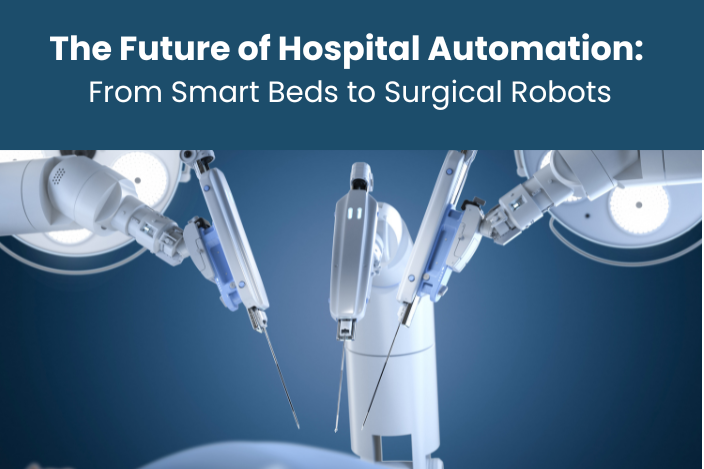
Though not yet widespread in every hospital, surgical robots are becoming an integral part of high-precision surgeries. These systems allow surgeons to perform complex operations with greater accuracy, minimal invasiveness, and faster recovery times for patients.
While Capri Medicals does not yet supply surgical robots directly, we can assist hospitals in sourcing and implementing these systems through our network of trusted partners. As surgical robots become more affordable and available, they will play a crucial role in enhancing hospital automation.
3. Advantages of Surgical Robots
-
Precision and accuracy: Robots enhance the surgeon’s ability to perform intricate procedures.
-
Minimally invasive: Reduced scarring and faster recovery for patients.
-
Reduced human error: Robots follow programmed instructions, improving consistency and safety.
-
Increased efficiency: Faster procedures with reduced operating time.
How Hospital Automation is Shaping the Future
Automation is transforming hospitals by improving workflows, reducing errors, and providing better patient experiences. With technologies like smart beds, automated transportation systems, and the future integration of surgical robots, hospitals can expect a more efficient, patient-centered environment.
At Capri Medicals, we are proud to provide innovative hospital equipment like the Five-Function ICU Electric Bed, designed to support healthcare providers in their automation journey.
Common Questions About Hospital Automation
1. How can smart beds help reduce hospital costs?
A: By reducing the need for manual patient repositioning and improving patient monitoring, smart beds reduce the time and resources needed for care, leading to overall cost savings.
2. Are surgical robots affordable for all hospitals?
A: While surgical robots are still a significant investment, their growing availability and the benefits they bring to surgery may justify the cost for hospitals looking to enhance precision and reduce recovery times.
3. How does hospital automation improve patient safety?
A: Automation improves patient safety by reducing human error, ensuring real-time monitoring, and providing alerts for potential risks or complications, leading to better overall outcomes.
Conclusion
Hospital automation, including smart beds and surgical robots, represents a major leap forward in patient care and hospital efficiency. While surgical robots are still emerging, Capri Medicals is committed to providing top-of-the-line automation-ready equipment like electric ICU beds and hydraulic stretchers to enhance hospital operations today.
To learn more about the automation solutions we offer or to discuss future technologies like surgical robots, contact us.
.png)
.png)
.png)
.png)
.png)









.png)